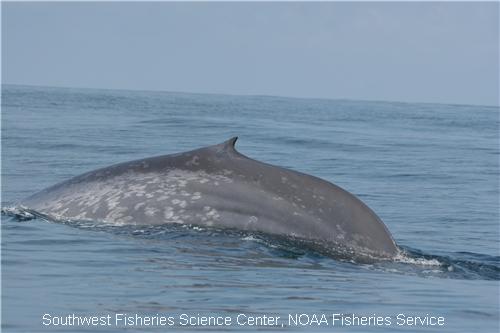
Blue Whales
Balaenoptera musculus · also called Sulphur-bottom Whale · Baleen whale
The blue whale is the largest animal known to have ever existed, a baleen whale found in oceans worldwide.
Classification
| Kingdom | Animalia |
| Phylum | Chordata |
| Class | Mammalia |
| Order | Cetacea |
| Family | Balaenopteridae |
| Genus | Balaenoptera |
| Species | musculus |
Size
Blue whales can grow to nearly 100 feet in length and weigh up to 200 tons — heavier than any other animal known to have lived, including the largest dinosaurs. Their hearts alone can weigh as much as a small car.
Description
Blue whales are mottled blue-gray in color, long and slender-bodied compared to other large whales, with a small dorsal fin set far back on the body and huge, flat, U-shaped heads.
Did You Know?
A blue whale's heart can weigh as much as a small car, and its calls are among the loudest sounds produced by any animal on Earth.
Habitat
Blue whales are found in all of the world's oceans except the Arctic, typically feeding in cold polar waters in summer and migrating toward the tropics to breed in winter.
Diet
Despite their enormous size, blue whales feed almost exclusively on krill, straining huge volumes of ocean water through baleen plates and consuming up to 4 tons of krill a day during feeding season.
Communication
Blue whales produce some of the loudest and lowest-frequency sounds of any animal, low rumbling calls that can travel for hundreds of miles underwater and are believed to help them locate one another across vast distances.
Reproduction
Blue whales carry their young for 10 to 12 months, giving birth to a single calf around 23 feet long that gains roughly 200 pounds a day while nursing.
Conservation
Blue whale numbers were devastated by 20th-century commercial whaling, and the species remains endangered; an estimated 10,000–25,000 blue whales exist worldwide today, a small fraction of pre-whaling populations.