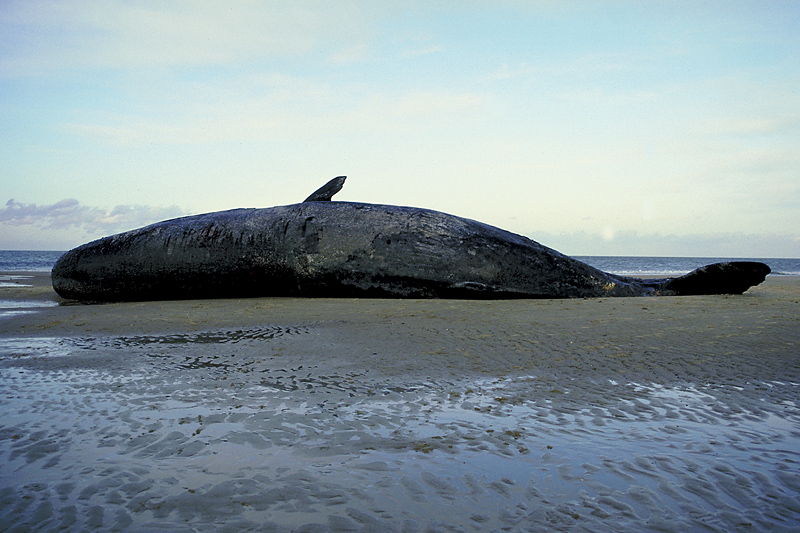
Sperm Whales
Physeter macrocephalus · also called Cachalot · Toothed whale
The sperm whale is the largest of the toothed whales and the largest toothed predator on Earth, famed for its massive, block-shaped head and record-breaking dives.
Classification
| Kingdom | Animalia |
| Phylum | Chordata |
| Class | Mammalia |
| Order | Cetacea |
| Family | Physeteridae |
| Genus | Physeter |
| Species | macrocephalus |
Description
Sperm whales have an enormous, block-shaped head making up roughly a third of their body length, housing the spermaceti organ — a reservoir of waxy oil once prized by whalers, now thought to help the whale focus sound for echolocation.
Size
Male sperm whales measure up to 52 feet and weigh as much as 45 tons; females are notably smaller, typically 36 feet and around 15 tons.
Did You Know?
A sperm whale's clicks, used to hunt in total darkness, are among the loudest sounds produced by any animal on Earth.
Diving
Sperm whales are the deepest-diving mammals on record, capable of descending over 7,000 feet and holding their breath for up to 90 minutes in search of prey in the ocean's dark depths.
Diet
Sperm whales feed mainly on deep-sea squid, including giant and colossal squid, as well as fish, using echolocation clicks — some of the loudest sounds made by any animal — to hunt in total darkness.
Social structure
Female sperm whales and their young live in stable social units of about a dozen individuals, while adult males roam more widely and often alone, joining groups only to breed.
Conservation
Sperm whales were a primary target of the whaling industry for their spermaceti oil, and though populations remain reduced from historical levels, they are found in every ocean and are considered vulnerable rather than endangered today.